This guest post is by Elian Pope, a student with interests in chemistry, engineering, and outdoor adventure. Elian is applying for the Spring 2026 Making a Difference Autism Scholarship through KFM Making a Difference, the nonprofit founded by Kerry Magro. Kerry was nonspeaking until age 2.5 and was diagnosed with autism at 4.
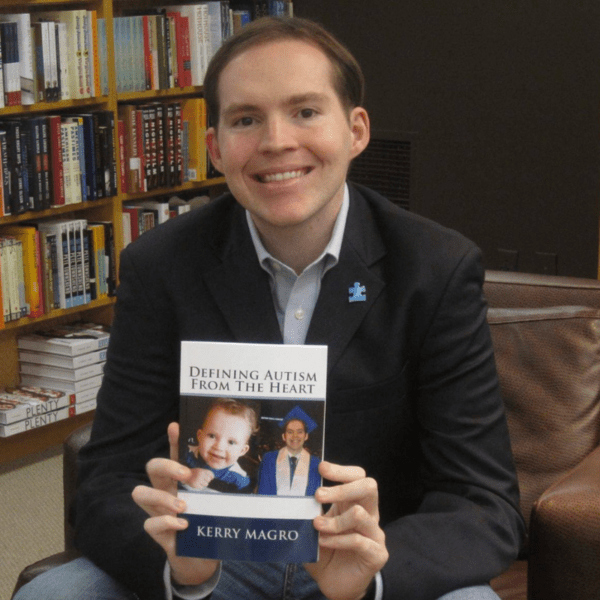
Autistics on Autism: The Next Chapter shares stories from more than 100 autistic adults about what helped them while growing up and pursuing their dreams. All proceeds support KFM Making a Difference initiatives, including this scholarship program. To invite Kerry to speak at your school, company, or organization, submit an inquiry here.
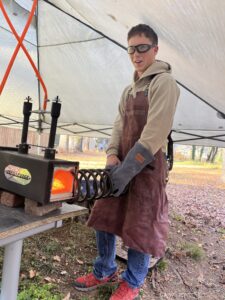
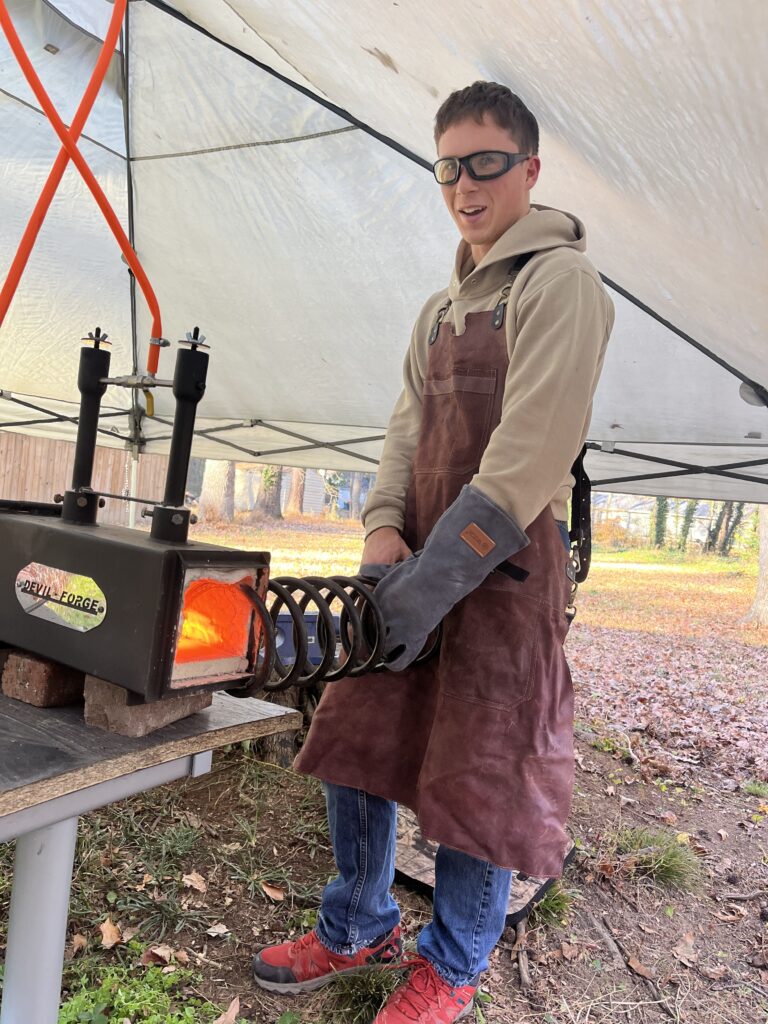
Elian Pope is a homeschooled high school senior with a long list of hobbies. He loves traveling, reading, surfing, martial arts, mountain biking, forging, and his Siamese cat. He also REALLY loves playing Spirit Island with anyone who’s willing to donate a few hours.
The ball hits my chest and bounces to the ground. I feel my face heat up as I see that I am being teamed up on. I’ve stayed within the rules of the game, but I somehow violated one of the unspoken dodgeball rules for my homeschool co-op – one of the many I’ve never understood. I sit down, furious, confused and humiliated. I plan how to get back at them at the first opportunity. Somehow when my revenge is complete, it surprises everyone, even my sister, who later says that I was “fighting with everyone today.” But I don’t see it that way. In my mind, they were unfair, and all I did was balance the scales.
I leave our co-op with my entire dodgeball team laughing at me and I tell myself I don’t care, but I do. A lot. It’s the same problem, different day.
The bigger problem is always the same: I don’t understand why it happened in the first place!
When I received my diagnosis of Autism, I learned that kids on the spectrum often struggle with understanding social cues and nuances. This did not surprise me; I struggled with these things my whole life, but had no idea it wasn’t normal, and didn’t have a name for it.
When I finished pre-K, my mother knew something was different. I reacted differently to school than most kids, and showed different learning patterns. She began homeschooling me, working hard to help me find the ways I learned the best, in a healthy and supportive environment. She worked tirelessly to help me learn social skills, how to manage my time, and how to manage all other aspects of my schooling. I had to work hard to learn a lot of things that came easily to other kids, but with a lot of support and guidance I finished high school.
I’ve always loved meeting new people and making friends. I am a major extrovert. In fact, my extroversion is the reason we waited so long to get me tested for autism. But for as long as I can remember, I have struggled with maintaining those friendships. My struggle to keep my emotions in check when I feel people are unfair has consistently pushed friends, new and old, away over the years.
Since a young age, I’ve worked hard with my parents and therapists to find strategies and help in addressing these difficulties. My parents were also very careful, when I was a kid, to explain why certain behaviors were wrong, how they made other people feel and what I could do to make things right. This helped me start to develop empathy for other people. As preparation for my fall semester at Southern Virginia University, I am currently taking a social skills class specifically designed to help people with autism learn how to recognize and follow social rules, and recognize social cues.
I know when I begin my university studies, I will continue to face challenges – but I’m determined to keep trying! I have always been fascinated by how things work, how to influence them, and what makes them tick. These interests have led me to the fields of Chemistry and engineering. Chemistry is how I learn about how everything works at an atomic level – how the universe is held together. I have loved learning about the theory behind nuclear power. Studying Chemistry would help me satisfy my desire to figure out how and why things work. Doing something that interests me is very important to my success in education. I can sometimes hyperfocus for hours and be so involved in a problem that I don’t notice how fast time passes, but I can also have a very difficult time focusing and take twice the amount of time on something than it should take, depending on how interested I am in the problem.
At any given time growing up, someone in our family of five was having some kind of trouble with their bicycle. We are a big biking family, but always having to take bikes into the shop is expensive and time consuming. But not all problems required a trip to the shop; most could be fixed with a little deductive reasoning. I loved tinkering with bikes, my brace and bit, my bow and arrow, and anything else remotely mechanical. I even learned to build my own radio, and am the main tech support for my family on any of our devices. I would also draw designs for invention ideas I had on little pieces of scrap paper, and would then spend weeks attempting to build them – with varying levels of success. I always had a mechanical mind, and spent so much time trying to figure out how to fix our bikes, my parents got me apprenticed to a bike mechanic. Learning engineering would build off of this fascination with how things work on a bit of a more physical level, and it would let me use this passion I have for designing, building, redesigning and rebuilding in a beneficial and efficient way.
Both of these are areas I am interested in studying, and both would lead me to accomplish my goals of being able to support my future family, contribute to the world, continue learning and discovering new things, and opening the door to achieving higher degrees. I want to use my mind in an efficient way, by striking a good balance between something I enjoy and that I find interesting, and something difficult that will require immense growth on my part. Studying engineering would also help me accomplish my dream of attending MIT for my Ph.D.
My journey with autism has been long and difficult, but also rewarding. My autism isn’t all there is to me, but it’s an important part of my story because it’s part of what makes me who I am. I’m excited for the next phase of my life!
By Elian Pope
Kerry Magro, a professional speaker and best-selling author who is also autistic, founded KFM Making a Difference in 2011 to help autistic students receive scholarship support for post-secondary education. Help us continue this work by making a tax-deductible donation here.
You can also invite Kerry to speak at your next event by submitting an inquiry here. Kerry speaks with schools, businesses, government agencies, colleges, nonprofits, parent groups, and conferences on autism, employment, college success, mental health, inclusion, and bullying prevention.