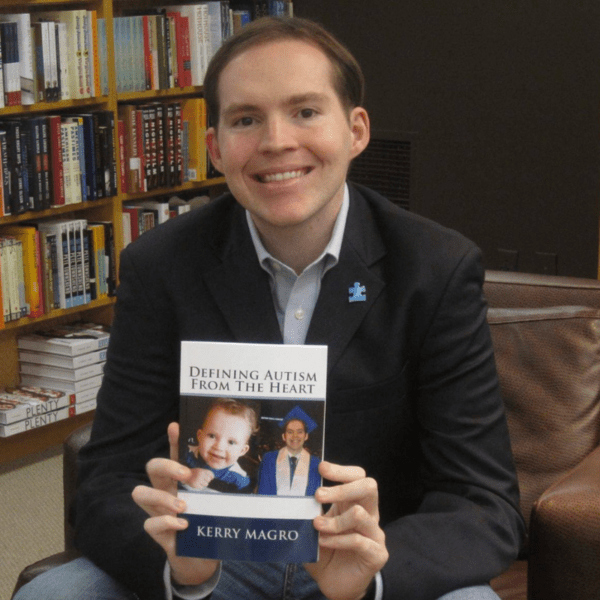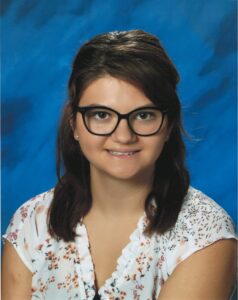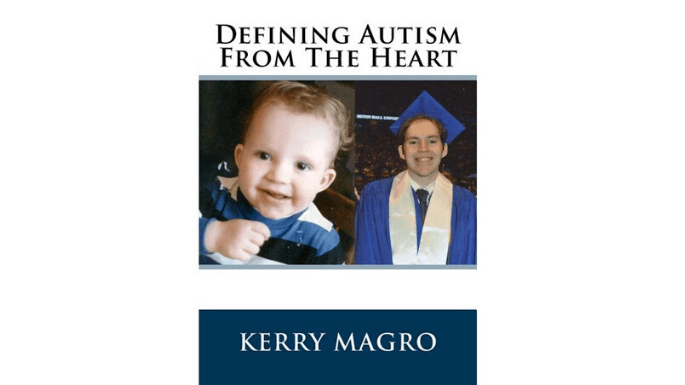
This guest post is by Onyx Ellerthorpe, an autistic student who was accepted to Michigan State University’s James Madison College to study Social Relations and Policy. Onyx is applying for the Spring 2026 Making a Difference Autism Scholarship through KFM Making a Difference, the nonprofit founded by Kerry Magro. Kerry was nonspeaking until age 2.5 and was diagnosed with autism at 4.
Autistics on Autism: The Next Chapter shares stories from more than 100 autistic adults about what helped them while growing up and pursuing their dreams. All proceeds support KFM Making a Difference initiatives, including this scholarship program. To invite Kerry to speak at your school, company, or organization, submit an inquiry here.
This essay is about my struggles and experiences growing up with autism, along with other interrelated parts of my neurodiversity, such as ADHD.
By Onyx Ellerthorpe
I have dealt with the challenges of living with autism and ADHD—which is not specified by the prompt but is practically intertwined with my experience of autism—mainly by speaking up for myself, advocating for myself, and building a community of people around me who are either autistic like me or understanding of my struggles and needs.
Socializing has always been a struggle for me. Eye contact makes me extremely uncomfortable, I have misunderstood social cues, and my tics and stims have seemed odd to others or have been interpreted as gestures with meanings that were not actually there. On top of all that, social anxiety made social situations emotionally difficult to withstand.
My main strategy has been self-advocacy: telling others why I stim and explaining how uncomfortable eye contact is for me. Despite these issues, I have luckily managed to become friends with several people who understand me and my needs.
Sensory issues are another major challenge in my daily life and at school. Paper and pencils can be very difficult for me, so I use pens despite my handwriting challenges. Once again, my strategy is to advocate for myself by making sure that people respect my boundaries and allow me to use tools that work for me.
Executive dysfunction and focusing problems are part of my ADHD experience. Getting myself to start doing something—and then staying focused once I begin—has been a massive struggle. It has frustrated me and others. I still think about how much I could have done if everything I wanted to do had not felt as if it were surrounded by a mental wall. The same thing happened with schoolwork, especially homework, where I could not get myself to begin. Others perceived this as laziness, which made me feel even worse about myself. After a great deal of waiting and advocacy, I received diagnoses and support that helped me immensely.
I did not always have these strategies or people who understood me, but through advocacy and perseverance I have been able to get what I need and push forward to become the person I want to be.
My proper awareness and understanding of autism and ADHD began in seventh grade, when the COVID-19 quarantine took effect. I was isolated at home, with a lot of free time and internet access, and I began to learn about neurodivergence.
At first, I studied on my own to understand why these things happened to me and what I could do about them. Eventually, I read lists of traits associated with ADHD and autism, which seemed to describe the things I had struggled with throughout my life. I read articles and watched videos by people who faced many of the same challenges and learned about how they navigated them.
I eventually asked my mom to help me seek a professional evaluation because I was having a hard time focusing in class. I thought I should get help when my efforts to handle these struggles by myself were not working. The first evaluation did not explain my experience in a way that felt right. I kept advocating, tried different supports, and eventually found a therapist who understood me and my needs.
More than a year later, my mom and I decided that I should be evaluated again because the supports and coping strategies I had tried had done little to address the things I was struggling with. I also wanted to be properly evaluated for autism, another condition I suspected I had.
The psychologist diagnosed me with autism and ADHD. I finally had certainty that these were the reasons for my struggles, along with strategies to help me manage them. I began receiving support that made it easier to start and focus on my work. I felt more energized, and many parts of my daily life became easier, less exhausting, and less stressful.
The journey has been long, and I still struggle in many respects, but I feel ready to move on to the next stage of my life: college.
Kerry Magro, a professional speaker and best-selling author who is also autistic, founded KFM Making a Difference in 2011 to help autistic students receive scholarship support for post-secondary education. Help us continue this work by making a tax-deductible donation here.
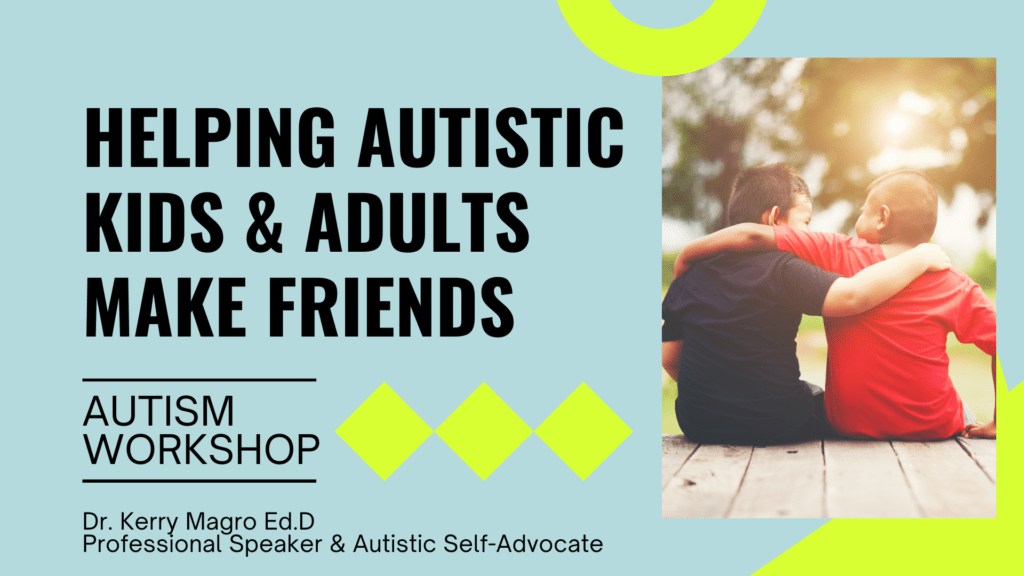
You can also invite Kerry to speak at your next event by submitting an inquiry here. Kerry speaks with schools, businesses, government agencies, colleges, nonprofits, parent groups, and conferences on autism, employment, college success, mental health, inclusion, and bullying prevention.