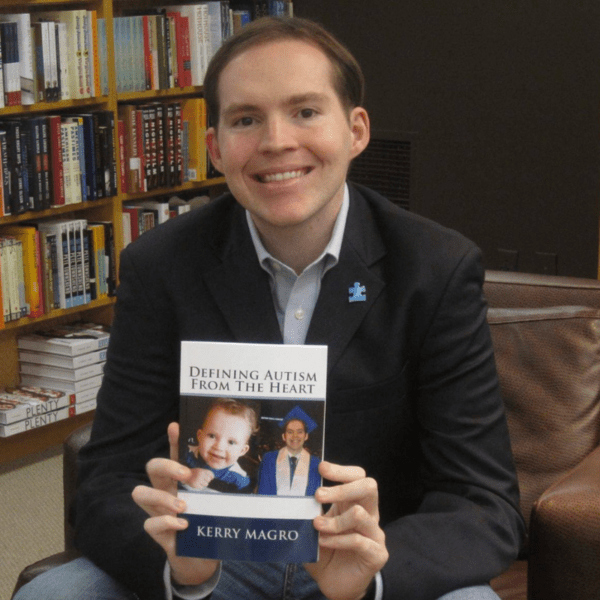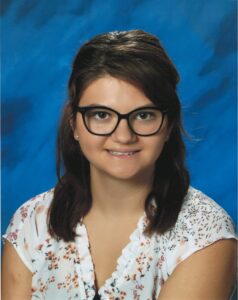
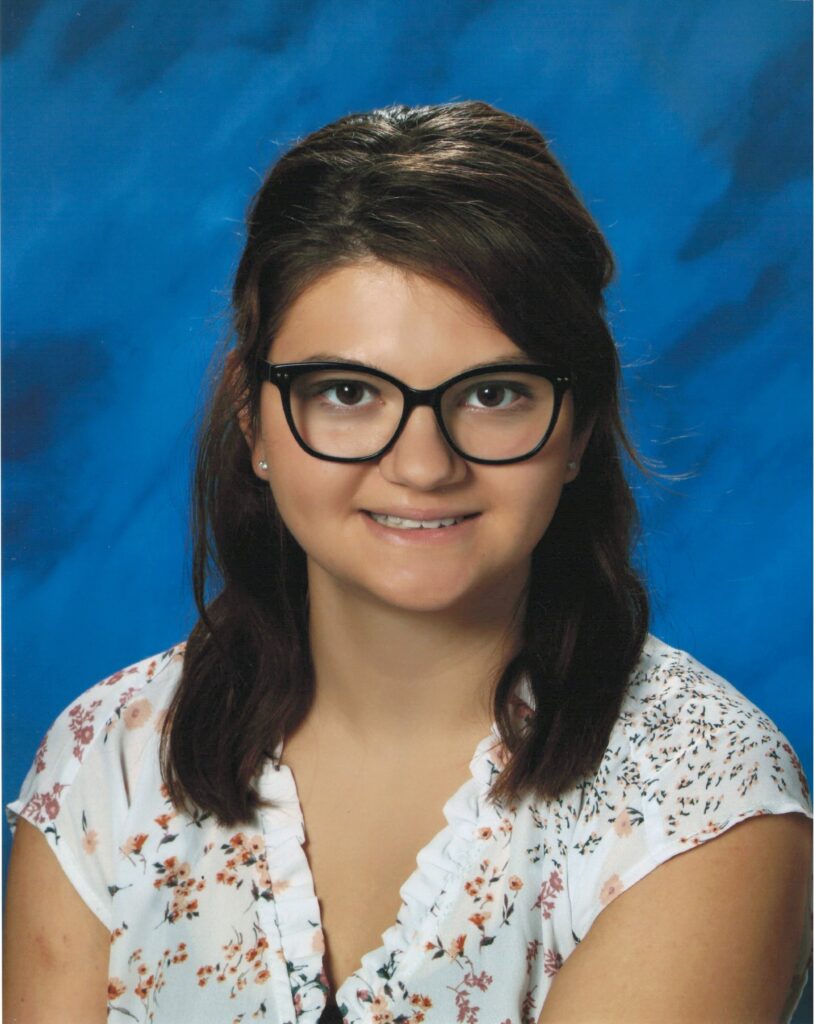
This guest post is by Jenna R. Barger, EIT, an electrical engineering student who plans to pursue graduate research in electromagnetics and photonics at the Florida Institute of Technology. Jenna is applying for the Spring 2026 Making a Difference Autism Scholarship through KFM Making a Difference, the nonprofit founded by Kerry Magro. Kerry was nonspeaking until age 2.5 and was diagnosed with autism at 4.
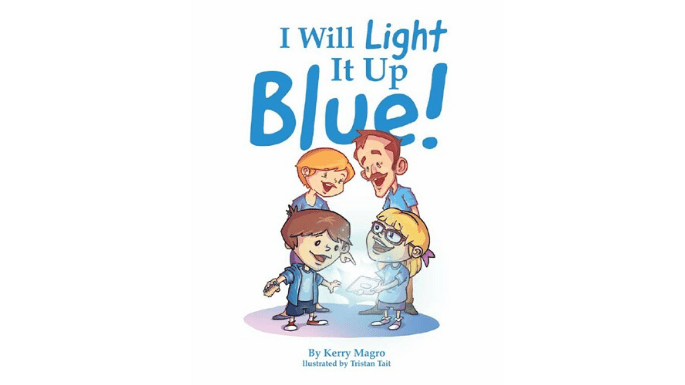
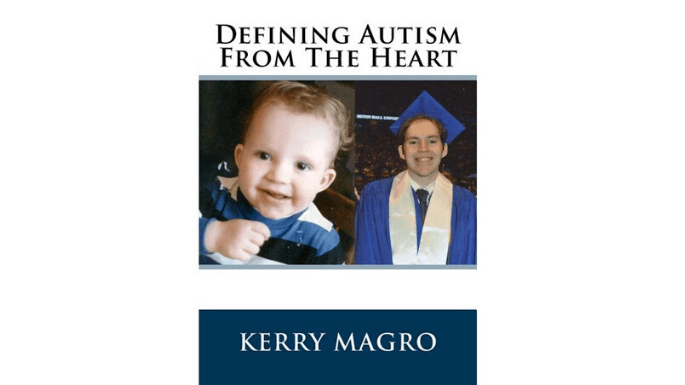
Autistics on Autism: The Next Chapter shares stories from more than 100 autistic adults about what helped them while growing up and pursuing their dreams. All proceeds support KFM Making a Difference initiatives, including this scholarship program. To invite Kerry to speak at your school, company, or organization, submit an inquiry here.
By Jenna R. Barger
I was diagnosed with autism and ADHD at age 19, after my sister received her diagnosis six months earlier. I had struggled to understand that I was autistic because, all my life, I had been told I was fine. Ultimately, getting diagnosed helped me better understand and accept myself. When I was in kindergarten, I learned not just how to mask but that masking was involuntary and widely welcomed as part of my survival. I struggled with social skills and often preferred being alone. Alone, I wasn’t as overwhelmed or exhausted, and I got to do whatever I wanted.
Kids often didn’t like playing with me because I needed to control how we played, down to a script. Otherwise, playing didn’t feel safe. Everything needed to be planned, and my peers didn’t understand that. Nonetheless, I saw that my peers were making friends, and because I did not want to seem different, I concluded that I also needed to make friends. The problem was that I didn’t know how to socialize. I didn’t understand why people became upset if I caught them in a lie and told them they were wrong. I often missed social cues and body language, which made me a target for jokes because I came across as desperate or foolish for not understanding when people didn’t want to be around me.
Thus, I fawned. I smiled all the time, nodded, and agreed. I wasn’t participating in the conversation, but I was there. I was present. The only thing I was missing was body language. I didn’t like being around people, and that included getting close enough to touch them or smell their shampoo. When I was diagnosed, the doctor helped me understand my different sensory sensitivities and how they affected daily life. Because I was incredibly uncomfortable being physically close to other people, my body language came across as passive or as though I didn’t care to be there. I didn’t understand this at age 5, and it was something I struggled with throughout my K–12 education.
People often overlook my struggles because I excel academically. Currently, I am a 4.0, high-honors student studying electrical engineering and mathematics. In my junior year of high school, I was accepted into a local community college’s Running Start program, through which I graduated with both my associate’s degree and high school diploma with honors. As a child, I frequently finished my tasks extremely quickly and accurately. In public school, a week was far too much time for me to spend on an assignment. Students didn’t like me very much because teachers loved me. Teachers loved that I had a great grasp of the material and could explain it in great detail, thanks to learning being my hyperfixation.
With lots of free time on my hands, my teachers would send me to teach and grade other students. I was happy to help—missing that my teachers were taking advantage of me—and thought I had made friends with my teachers because at least they seemed to like me. I learned the hard way that my teachers were not my friends and that they often did not have the best intentions for me because they had to consider many other students as a whole.
As a child, my peers called me names and avoided me. They didn’t like that I was blunt, asked clarifying questions, and had a strong sense of justice. Moreover, they didn’t like that I would advocate for myself if they confronted me. I didn’t care for relationships as I grew older because I didn’t understand how people could be so cruel. Instead, I focused solely on my studies and goals, and in a way, that was both gratifying and hurtful in the long run.
I’m incredibly high-achieving, and I don’t often recognize how significant my achievements are. I later learned that this is an aspect of my autism. Statistically speaking, I know that I’m not the smartest person in the room and that intelligence isn’t linear or direct. This makes me appear humble, but it also means I overlook celebrating my achievements. It wasn’t until recently that I recognized that graduating is kind of important. I didn’t attend my high school graduation, and I did the bare minimum for my community college graduation.
In the long run, focusing solely on my studies not only made it harder for people around me to accept that I am autistic, but it also made it difficult for me to understand that I am autistic. I’ve been told that I don’t look autistic and that I possibly can’t be autistic because I’m so smart. When I meet with professors to sign accommodation reports, they sometimes assume within the first 30 seconds of meeting me that I’m not smart enough for their class. After I ace their first exam, they are baffled.
These moments may seem challenging—and believe me, they are—but they have also taught me that other people’s opinions don’t matter to me. My autism diagnosis wasn’t for other people to understand and feel good about themselves; it was for me, to help me understand myself better. I overcame my challenges with social skills by pushing myself into group projects, leadership roles, and jobs where I was required to interact with clients. It turns out that many engineers I meet are black-and-white thinkers, blunt, and fond of dry humor, so I fit right in.
Growing up with undiagnosed autism taught me that I was much stronger as a child than I give myself credit for. Each negative social interaction I faced taught me how to be compassionate, enthusiastic, and charismatic toward others because I know what it feels like to feel less than enough. I found people who enjoy being around me not just because I’m smart, and being their friend is by far one of my greatest accomplishments.
Kerry Magro, a professional speaker and best-selling author who is also autistic, founded KFM Making a Difference in 2011 to help autistic students receive scholarship support for post-secondary education. Help us continue this work by making a tax-deductible donation here.
You can also invite Kerry to speak at your next event by submitting an inquiry here. Kerry speaks with schools, businesses, government agencies, colleges, nonprofits, parent groups, and conferences on autism, employment, college success, mental health, inclusion, and bullying prevention.