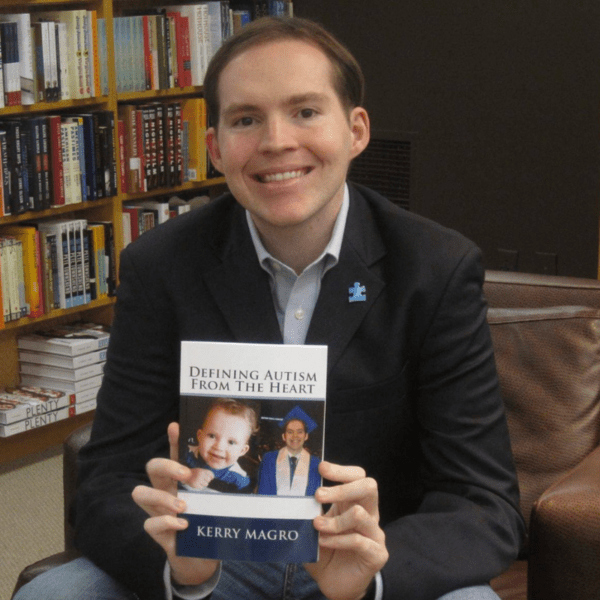
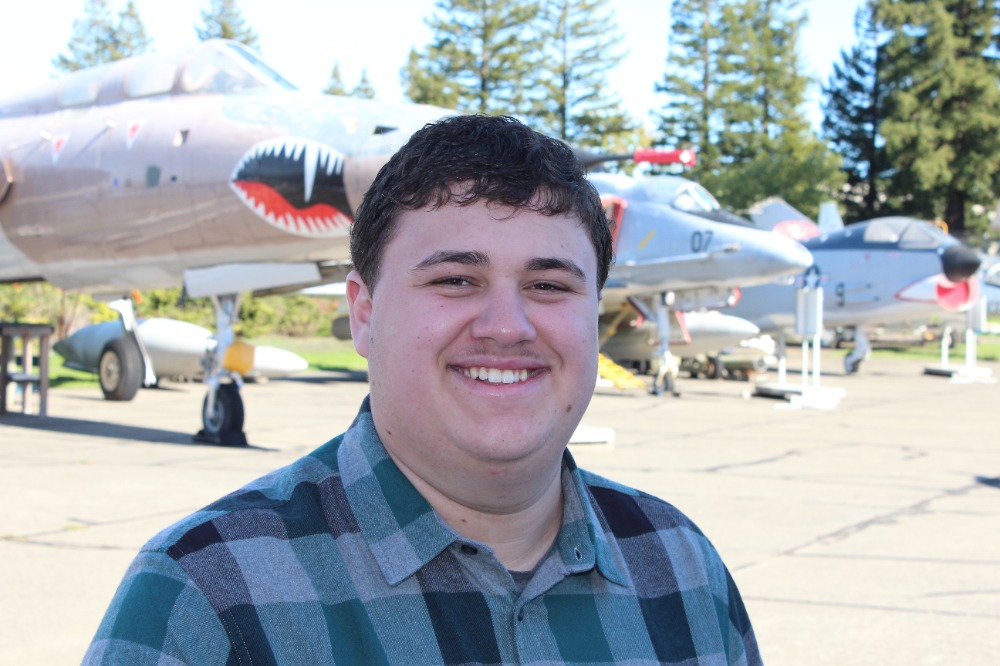
This guest post is by Nathan Peterson, a high school senior who will attend Sonoma State University to study electrical engineering. Nathan is applying for the Spring 2026 Making a Difference Autism Scholarship through KFM Making a Difference, the nonprofit founded by Kerry Magro. Kerry was nonspeaking until age 2.5 and was diagnosed with autism at 4.
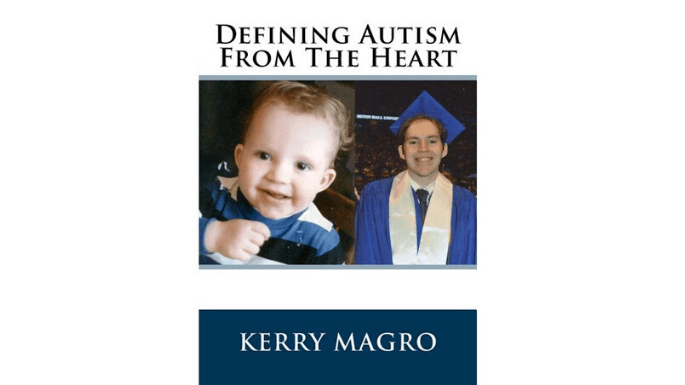
Autistics on Autism: The Next Chapter shares stories from more than 100 autistic adults about what helped them while growing up and pursuing their dreams. All proceeds support KFM Making a Difference initiatives, including this scholarship program. To invite Kerry to speak at your school, company, or organization, submit an inquiry here.
By Nathan Peterson
The day had arrived: kindergarten show-and-tell. As I sat on the scratchy carpet next to all the others with their beloved stuffed animals or favorite toys, my annoyance at the teacher’s perfume and the stuffiness of the kindergarten room faded away while I obsessed over picking off the two pieces of glitter stuck to my thumb.
“NATHAN!”
Oops, that likely wasn’t the first time the teacher had called my name—or the fifth—but nonetheless, I stood to share my own beloved item, my pièce de résistance, my magnum opus: my list of fractions, each one the last divided by two. 1, ½, ¼, ⅛, halting at 1/256 only because the traitorous paper had decided to end.
To my complete dismay, the anticipated acclaim of cheers and applause was confusingly absent, replaced with an incomputable, “That’s cute, Nathan.”
~bzzt~
Logic_error
Growing up, there was always something different about me in the eyes of those around me. Where other children had playdates and sleepovers, I organized soda cans in the pantry. When other children gleefully rode the carousel, I studied the mechanical arm above me. To be honest, I immersed myself in my own bubble and was content to watch documentaries all weekend and think about math constantly. Didn’t everyone do that?
Eventually, my differences became…too different. Teachers, tired of their numerous attempts to get me to focus on lessons, resorted to reprimands and consequences. Classmates, aware of how easy it was to poke fun at the loner, would point out my stimming so that others would join in the revelry. In time, I felt rejected by the world, which only pushed me to isolate myself further. I felt out of place with other children. I responded in the only ways that worked to keep them out of my bubble—pushing or shoving—neither of which was a good option, according to the principal.
“Well? Well? Am I? Am I?” Sitting in the back seat, waiting for my parents to tell me the news shared with them only moments ago by the “big city” psychologists, was exhausting. For three hours, I had been mentally and socially poked and prodded, leaving my 9-year-old self chomping at the bit to know the results.
As delicately as she could phrase the news, through tear-stained eyes, my mother confirmed, “Yes, they say that you meet the markers for autism.”
“YES!”
Though others might see autism as an insurmountable force that adds weight to life, to me it felt like a neat little label for all my quirks and traits that I could now keep organized. That single confirmation gave me a reason for my differences.
Receiving my diagnosis unlocked doors. Years of behavioral therapy allowed me to understand and practice social skills, and it leveled the playing field when interacting with peers. Eye contact and reciprocal conversation could now be explained, practiced, and learned. My IEP provided classroom accommodations and a support network at school, which allowed my love of learning to rise above my behavioral challenges. Teachers, now understanding the reasons for my stimming and sensory needs, were much better equipped to accommodate me so I could thrive socially and academically.
And thrive I did.
Once my social and behavioral needs were addressed, my academic wings spread. Throughout high school, I have maintained a GPA above 4.0 with a schedule packed with honors and Advanced Placement classes. My near-perfect scores on both the CAASPP and SAT are testaments to the quality education I have embraced and my commitment to achievement. I’ve proven that I am capable of taking classes meant to replicate college-level courses, and my AP exam results show that I am prepared to succeed.
That little boy who lashed out against social interactions he didn’t understand now has empathy and understanding for the needs of others who are neurodivergent. While treating neurodivergent people the same as anybody else may be egalitarian in intention, it can obscure the nuances or learning differences an individual may have. Just as you could describe somebody as a visual or auditory learner, being neurodivergent can mean that a different approach is needed. The term “neurotypical” contains “typical” for a reason: no single person wholly embodies the exact average. By learning to see the exaggerated or magnified tendencies and preferences of neurodivergent people, it becomes easier to see those quirks and traits in people considered neurotypical. Really, nobody is precisely normal.
I am not so different from my younger self. My mannerisms and behaviors may have changed, but what made me truly me—my quirks, interests, and lust for knowledge—has never faded. If you stripped my character down to the bare essentials, I am what I always was. But add back the layers, and you will see that my struggles, both in life and with autism, were worth it. That same little boy still shines through with the same gap-toothed smile, but his rough edges have been smoothed, and he shall forever thrive in the world he once avoided.
Kerry Magro, a professional speaker and best-selling author who is also autistic, founded KFM Making a Difference in 2011 to help autistic students receive scholarship support for post-secondary education. Help us continue this work by making a tax-deductible donation here.
You can also invite Kerry to speak at your next event by submitting an inquiry here. Kerry speaks with schools, businesses, government agencies, colleges, nonprofits, parent groups, and conferences on autism, employment, college success, mental health, inclusion, and bullying prevention.