This guest essay is by Alex Morgan (a pseudonym). Alex is an autistic student preparing to study biochemistry. She hopes to research neurodevelopment and shares how self-advocacy and supporting younger campers shaped her confidence.
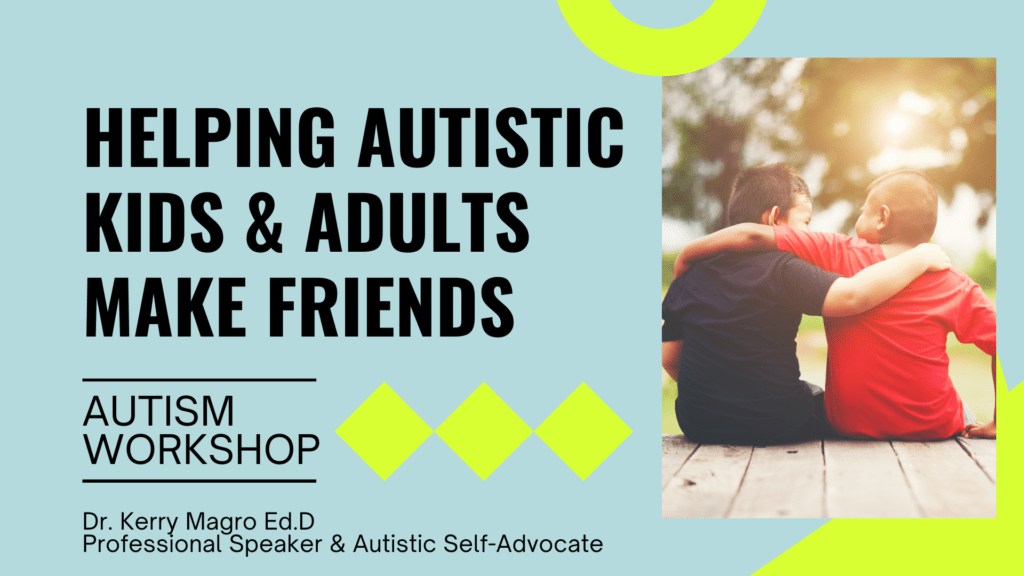
Published under a pseudonym at the applicant’s request. Identifying details have been generalized to protect privacy. The accompanying image is a stock photograph.
Before I had words, I had the world arriving all at once.
I was 21 months old when my parents first brought me to a speech and language clinic. I had about 15 words. I couldn't respond to my own name. Loud sounds sent me spinning. I needed to hold certain objects, a spoon, a block, just to reorganize myself enough to reengage with the room. By the time I was two years and five months old, I had received a formal diagnosis of Autistic Disorder. My parents were handed a clinical report and a stack of referrals. They were also handed a choice about how to frame what came next.
They chose not to tell me.
Not out of shame, but out of love. They didn't want a label to arrive before I did. They wanted me to discover who I was before anyone told me what I couldn't be. So instead of a diagnosis, what I got was a childhood full of occupational therapy, speech therapy, physical therapy, music therapy, and Floor Time sessions, all the scaffolding of early intervention, without the ceiling of a fixed identity.
It worked, mostly. I was mainstreamed into kindergarten. I learned. I grew. I thrived, in my own particular way. But I also knew, always, that I was different. I felt the world more intensely than other kids seemed to. Loud rooms could swallow me. Transitions were hard. I got absorbed in things, chemistry sets, microscopes, the precise language of science, with an intensity that felt less like interest and more like gravity.
In fifth grade, a special education teacher saw me clearly for the first time. She called what she saw ADHD and dyslexia. She called them disorders. I remember sitting with that word, disorders, and feeling something crack open inside me. Not broken, exactly. But labeled. Contained.
The real reckoning came in tenth grade. A teacher demanded, in front of the entire class, to know why I needed to take my test in the resource room. My body still trembles at the memory, the heat of everyone's eyes, the scramble to hold myself together. I asked him quietly if we could discuss my needs in private. He said he understood. He didn't. He questioned me for the rest of the year.
That year taught me something more valuable than anything in his curriculum: that self-advocacy is not optional. That no one is coming to protect you inside your own story. I learned to name my needs clearly, without apology, and to reframe what others called weakness as a different kind of strength. My ADHD makes me passionate and relentless. My dyslexia forces me to slow down, get creative, and notice what others miss. I finished high school with strong grades, thriving in AP and Biotech coursework, not despite how my brain works, but because of it.
It wasn't until recently that my parents shared the full clinical record with me, the clinical reports from when I was a toddler, the ADOS scores, the formal autism diagnosis I'd never known I carried. I sat with those documents for a long time. The little girl in those pages, dysregulated by sensory input, reaching for objects to anchor herself, speaking in single words at an age when other children spoke in sentences, that was me. And she had worked so hard to become who I am now.
I wasn't angry that I hadn't been told. I understood. They had given me the gift of becoming myself first.
Now I call it my "touch of the 'tism." Not to minimize it, but to own it, with warmth, and humor, and the kind of self-possession that only comes from having actually earned your own identity. Autism is not incidental to who I am. It is woven into how I perceive, how I connect, how I think.
The summer before senior year in High School, I served as a Counselor in Training at an overnight camp. Three of us were assigned to cabins of campers with special needs. At our first dinner, while the whole dining hall was singing loudly in cheers, I watched a girl in my cabin cover her ears, her eyes wide with a panic I recognized instantly, because I had lived inside it. I took her hand and guided her outside. We sat together in the quiet. I told her that loud noises bother me, too. That sometimes we have to step away and breathe.
She found me every time the world got too loud that summer. On the last day, she told me it had been the best summer of her life.
In the fall, I will begin studying Biochemistry at college. I intend to study the molecular underpinnings of neurodevelopment. I want to understand, at the cellular level, the biology of minds like mine.
I am not interested in being normal. I have worked too hard to become myself.
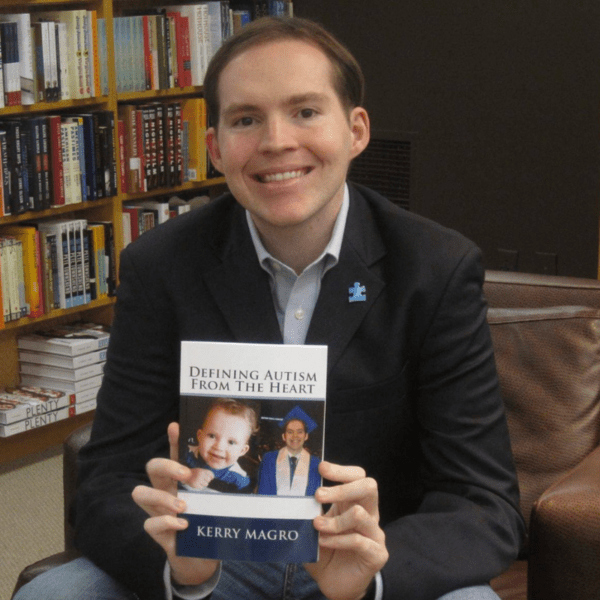
This essay was submitted to the KFM Making a Difference scholarship program, founded by Dr. Kerry Magro to support autistic students pursuing postsecondary education. Publication does not announce a scholarship award.
Learn about Kerry’s speaking programs or support the scholarship program.