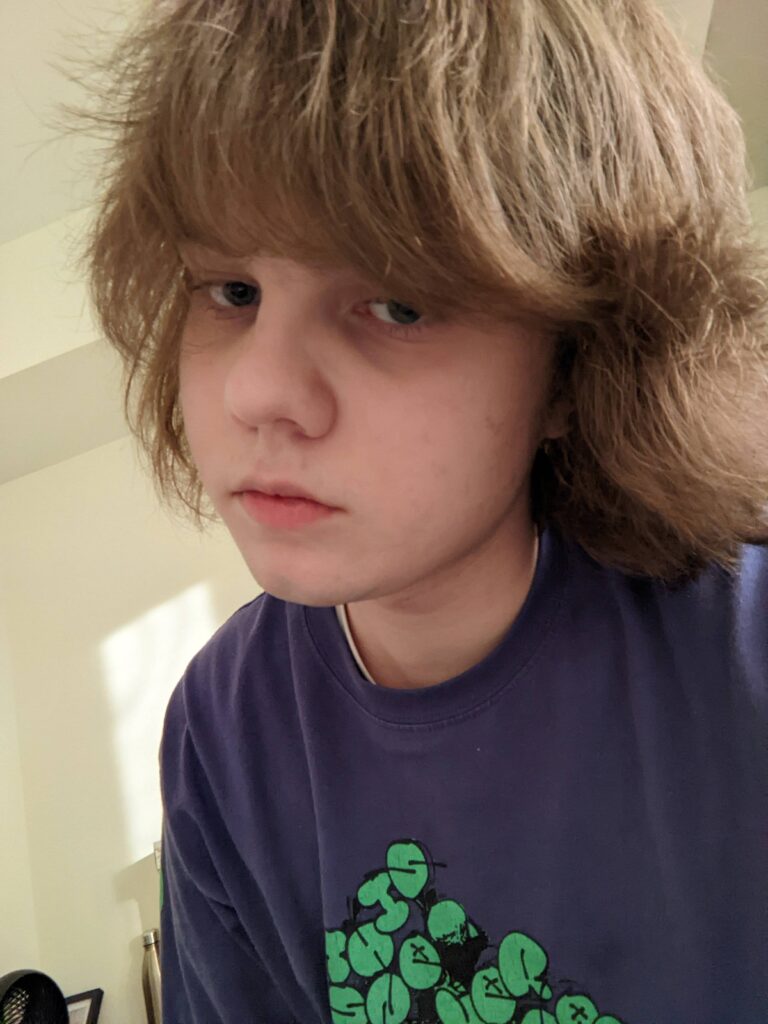
This guest essay is by Nathan Flindall.
My family and adult acquaintances suspected I had autism from around the time I was two years old, due to symptoms such as my irregular speech, hyperfixations, extreme shyness, etc. I was frequently bullied for traits correlating with my symptoms and sometimes explicitly for being autistic, often being derided as a “retard", with some even posing as my friends only to express revulsion upon finding out I'm autistic and claiming it made me lesser and a social embarrassment. One series of events between 10-12 years old that left me with lingering trauma was when I had a group of friends who would often goad me into performing embarrassing tasks, belittling me before passing off my flustered reactions as me having “autistic fits”. They secretly created a chat where they would refer to me as “retarded”, a “freak” and expressed hope that I would kill myself and then calling me oversensitive and strongarming me into refraining from telling adults when I found out about it and was devastated. I was also derided by multiple teachers along similar lines, some even refusing to adhere to my IEP guidelines because they saw my disability as "failure" rather than an inalienable condition. I recall when my fifth grade homeroom teacher called me “slow” in front of the entire class after I asked for more time to finish writing a paragraph and dumping out my entire desk to show the class that I was insufficiently organized, according to his standards.
I left my original school for another public school due to the intense bullying I received, on the condition I had to enrol in an ASD class for two periods. At my new school, I managed to flourish academically and, to a degree, socially, thanks to the help of my teachers, who tried to instill acceptance of my condition in me. However, the next year I was placed with a domineering teacher who again enjoyed singling me out and quibbled over the legitimacy of my IEP accommodations, making me feel as though I was deficient and simply needed to try harder. By then, I had made another group of friends, one of whom shortly revealed to me that he regarded me as burdensome to be associated with due to my autism, after I’d transferred to his secondary school on the condition of yet another two years of ASD classes due to his pleas that he was lonely and would keep me in his company, a promise he abandoned once he made neurotypical friends.
I developed depression before the age of 10, which was diagnosed in this time, and attempted suicide after this last betrayal in a string of several, compounded by my harsh work environment at my first job. I was socially sustained in my material life in this time by my ASD teachers, especially one teacher, who took the time to converse with me about complex matters in a manner that did not feel condescending and demonstrated emotional investment in me as a person, not just a student whose existence began and ended with the school day. Outside my academics, my experiences with ostracism left me convinced I would never fit in and caused me to withdraw socially amidst COVID-19 lockdowns, becoming reclusive outside occasional passive socialization. In the 12th grade, I had gone years without material friends, until I found myself in the company of a few empathetic new friends, who reached out through points of common interest and, for the first time in my secondary peer-to-peer life, did not demonstrate any prejudice toward me, even when I bluntly admitted to having autism. The newfound knowledge that I had multiple peers willing to socialize with me without judging me for my autism was revelatory and made me far more outgoing than I had been up to that point, propelling me toward confidently mingling with my peers and joining class discussions, which provided the opportunity for more of my peers to clarify that they wished to socialize with me more often and that my isolation was largely self-imposed.
Despite these developments, my depression was maintained by academic struggles due to two teachers again disputing the validity of my IEP accommodations and marking my work arbitrarily while demeaning my idiosyncrasies. One of these teachers was an English teacher who discouraged me from pursuing my creative ambitions due to his belief that I was too eccentric and failed to meet his largely arbitrary standards for excellence, marks docked due to said standards resulting in me failing to be accepted for Film Studies by my first choice university then. At the same time, my last living great-grandparent, my dear great-grandmother, died from unnatural causes, leaving me devastated after I had been unable to visit her due to COVID. I spent the next year listlessly pursuing my Psychology degree at the University of Ottawa, my only place of solace being the film club, where I met likeminded individuals who urged me to pursue my passion of writing and directing films. I was reluctant to change course, feeling my path had been set in stone, until I was ejected from my faculty for falling below the expected GPA. At another time, I would’ve been broken by this, but I realized I had been afforded an opportunity to start over, with nowhere to go but up. Since then, I have been raising my GPA in the hope of transferring to the University of Toronto for Film Studies and Creative Writing, knowing I have genuine friends who believe in me, not as a means to an end but an end unto myself. To provide you with catharsis after a wearisome read, please let me summarise what I now know: autism is an opportunity, not a barrier, for a unique perspective, good people are always there, even if they take time to find, and YOU, no one else, are ultimately the author of your own destiny.
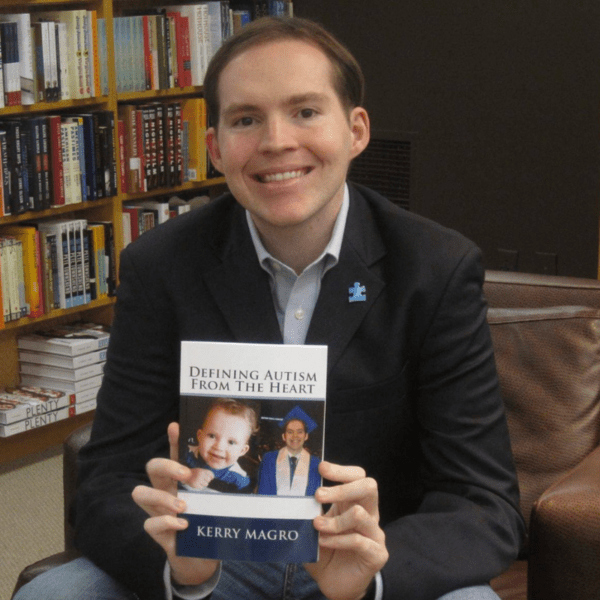
This essay was submitted to the KFM Making a Difference scholarship program, founded by Dr. Kerry Magro to support autistic students pursuing postsecondary education.