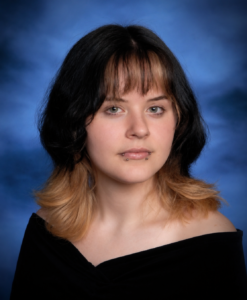
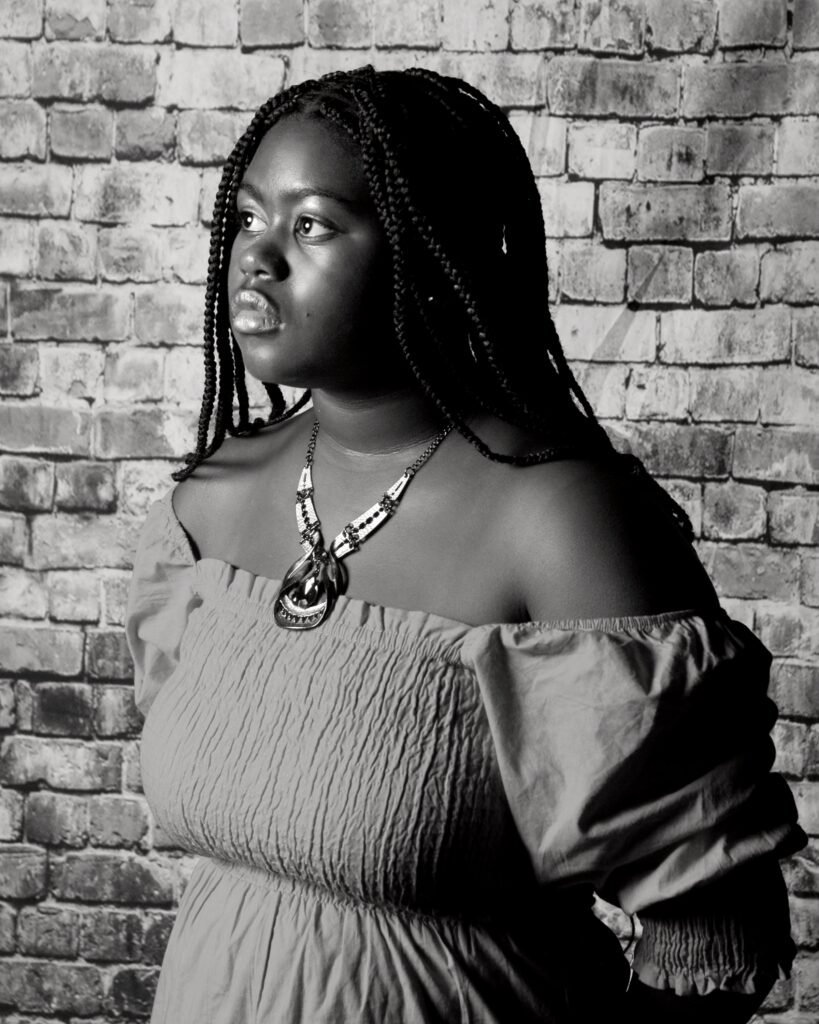
This guest essay is by Caile Dawson. Caile Dawson (2008) is a student and illustrator for the book Little Vivian's Star-Filled Dream. She attends South Pointe High School for education.
As a third grader, I realized I was not like most of my Gifted and Talented classmates. My peers focused on academic concepts with little instruction, yet I felt less informed in class and needed more assistance. Instead of asking for help, I would draw pictures of myself experiencing enjoyment. I began to struggle with grade-level content which was not connected to my Gifted and Talented courses. Eventually, I built the confidence to ask clarifying questions, which led to bullying for not understanding the material quickly. Then, in sixth grade, I noticed how my peers learned academic concepts with little instruction, yet I required more assistance. My mom decided it would be best for me to get a math tutor. Math gave me the most academic trouble. When the pandemic started, I began to feel anxious–far more anxious than usual due to missing the end of my sixth-grade year and my entire seventh grade year. I even struggled to participate in family activities at home. The idea of the situation led me to think more about myself. As a result, I began to venture into topics like neurodivergence and how it affects the people who deal with it. I stumbled across two diagnoses through online research: ADHD and Autism. ADHD described me very well because I often struggled moving from task to task. I found myself getting stuck on one subject, (executive dysfunction,) which made it hard for me to focus after Zoom lessons ended. My interests also encompassed my mind, (which I later learned is called ‘hyperfixation’.) While attending in-person school, one of my friends did not take kindly to my hyperfixations and found them disturbing. I did not understand why because I had not done anything inappropriate. However, after learning about Autism, I better understood why I felt so left out. I learned that my communication style was not traditionally attuned to others. As a result, while attending in-person school, my drive to complete my schoolwork had already begun to dwindle and got even worse as the pandemic started. Simultaneously, my emotions became more difficult to regulate. Through personal research, I learned this was called Autistic Burnout. I sat on this information for a while until I finally gained the courage to tell my mother. I can still remember her cooking sausage on the stove. Although I did not want to interrupt my mother, I also knew this information about Autism could not stew inside me any longer. When I finally got the results back, I danced and stimmed with excitement in my room; it was nice to have a name for my diagnosis and to know that I researched it on my own. Over the years, I learned to advocate for myself when I needed help, and to push through embarrassment. Nevertheless, as an African American student with Autism in honors classes, I often had my peers make rude remarks about my grades and murmur to one another when I asked questions. Therefore, at the time, I considered using my accommodations a last-ditch effort, but as the assigned work became increasingly difficult, I found that I was better off receiving extra help. This meant staying after school or coming in early in the morning for tutoring.
Because I live on the Autism spectrum and have ADHD, learning is not always easy; a part of my mind still stumbles each time I try. However, regardless of whether it is a short-term or long-term setback, I will remain curious as a student, problem-solver, and in life.
Even still, there were times when my teachers were not graceful when sending me to the testing room to receive my accommodations for additional testing time; however, I took those moments in stride and chose not to be ashamed. In my Senior Level Environmental Science class, a classmate told me I struck them as “autistic.” I did not shy away from the remark at all. I said that “I am Autistic actually." The silence from my classmates frightened me a bit but allowed everyone to ask me a few questions. Eventually, everyone started talking again, and I realized how far I had come in accepting my Autism. Despite momentary nervous sweating, I realized in that moment that I had grown into someone capable of pushing through strong feelings of anxiety to share what is important, no matter what the challenge. After that moment, I began to use my difference as my strength. I participated in a pageant with a platform to promote Autism awareness and acceptance. I became captain of my high school Varsity swim team, a BETA club member, a participant in the National Art Honor Society, a National Honor Society member, and a principal scholar, among other achievements. Also, I have grown as an individual. Due to my childhood obstacles, I empathize with others who often feel marginalized. For example, as a junior camp counselor at the POP Powerful Youth Summer Leadership camp, I showed genuine interest in the campers by partnering with them, asking about their concerns, and mentoring them. Helping campers enabled me to develop into a more compassionate, empathetic leader. In the future, I hope to bring joy to others through my artistic talents and career endeavors. Through my college education, I plan to use my innovative artistic abilities and my deep-seated desire to help the world become a better place for everyone. I will not allow my differences to hold me back; my difference is my strength.
This essay was submitted to the KFM Making a Difference scholarship program, founded by Dr. Kerry Magro to support autistic students pursuing postsecondary education. Publication does not announce a scholarship award.