This guest essay is by Magdalena Stay.
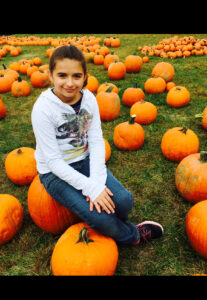
As part of preparing for my high school graduation, my mom asked me to go through a ton of old photos of myself and pick a few that I wanted to print out for my grad party. As I looked through all the pictures of me in elementary school, one thought kept coming to me: Wow. I really was autistic all along.
I was born on the West Coast, but my family relocated to a small town on the Gulf Coast of Alabama when I was 5. My family’s northern heritage and West Coast way of thinking was already frowned on by other members of the community, but the way that me and my neurodiverse siblings seemed to be actually offensive to some of our neighbors. So I changed myself to fit in.
I could see myself shrinking as I went through these photos. Gone were the cute pink shorts, in were the beige skorts. Gone were the pigtails, in were the carefully curled ponytails. My smiles turned scared and tired in a way they’d never been when I lived in other places. I was having what I now know are panic attacks multiple times a week. I was expending so much effort into making sure other people liked me, and that I was acting the ‘right’ way, that just living my life took more energy than I had to give.
When the pandemic hit, and I was locked down for all of 7th grade, it was almost a mercy. All of a sudden, my outfits got more colorful, my hair came down, and my smiles reached my eyes again. I’m not saying that I enjoyed lockdown, but I have to acknowledge that it gave me a break I desperately needed. The summer before 8th grade, we moved again, this time to Idaho.
This transition was easier. After a chaotic year of 8th grade, I started attending a smaller accelerated pace high school. Whether the ease was due to a more accepting group or just my carefully practiced ability to hide the parts of me I was scared other people wouldn’t like, I can’t say. But I do know that around this same time, my older brother got his autism diagnosis. The medication and therapies available to him made me stop and think. We’d been acting the same way for years, I was just better at hiding it when I was around people. So, I asked my mom if she thought I had autism.
I don’t think my mom took me seriously the first time. But when I keep bringing up the point, again and again, she scheduled an appointment with a psychiatrist. To only my parent’s surprise, I was diagnosed with autism spectrum disorder at the age of 16. Since my diagnosis, I’ve been able to find support systems and comfort in my own self. I’m not saying my life is easy now—but I have been able to mask less. I can act like who I think I really am in public. I can gush over Taylor Swift and local restaurants that serve my safe food. My friends are ready for it; they even like me because of it, not just in spite of it.
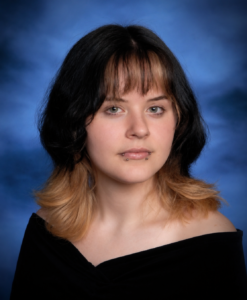
Since getting my autism diagnosis and the treatments available to me because of it, I’ve learned how to smile again. I look like myself—not like how I did when I was 7, or 9, or 12, or miserable, but when I was 4. When I was still autistic, but also happy. My mom’s simple invitation to look through old photos and choose a few favorites was actually a revelatory experience for me. It even reminded me why I’m choosing my future to be the way it will be.
I plan to double major in creative writing and applied mathematics. I think women with autism belong in both of these spaces, and they’re both things I love doing. Many of my current creative writing projects feature neurodiverse characters. I don’t consciously include them to make a point. They’re just such an integral part of the way I interact the world that I can’t imagine writing worlds where they don’t exist. Many of these characters originated before I got my diagnosis. Many of my favorite characters, ones I liked before my diagnosis, are either canonically autistic or are commonly headcanoned (accepted by the fan base) to be.
Again, this wasn’t intentional. It was the true me popping up, the one who likes color and stories and food and nature, the one who is autistic, has always been, and always will be. Though I haven’t always been comfortable with this, I am now. I've been autistic all along, and I wouldn't trade that for anything.
This essay was submitted to the KFM Making a Difference scholarship program, founded by Dr. Kerry Magro to support autistic students pursuing postsecondary education.